
捉迷藏
AI推翻87年数学难题?困扰数学界的雅可比猜想,可能被三行公式证伪了_我的网站

A |
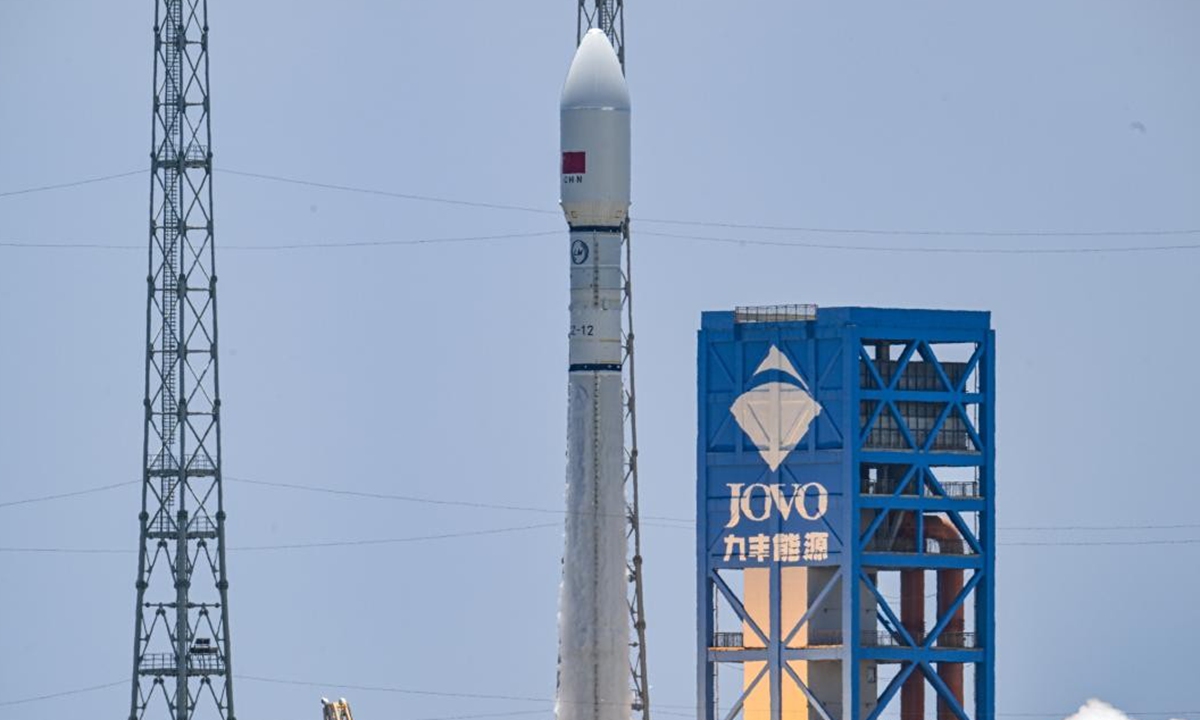
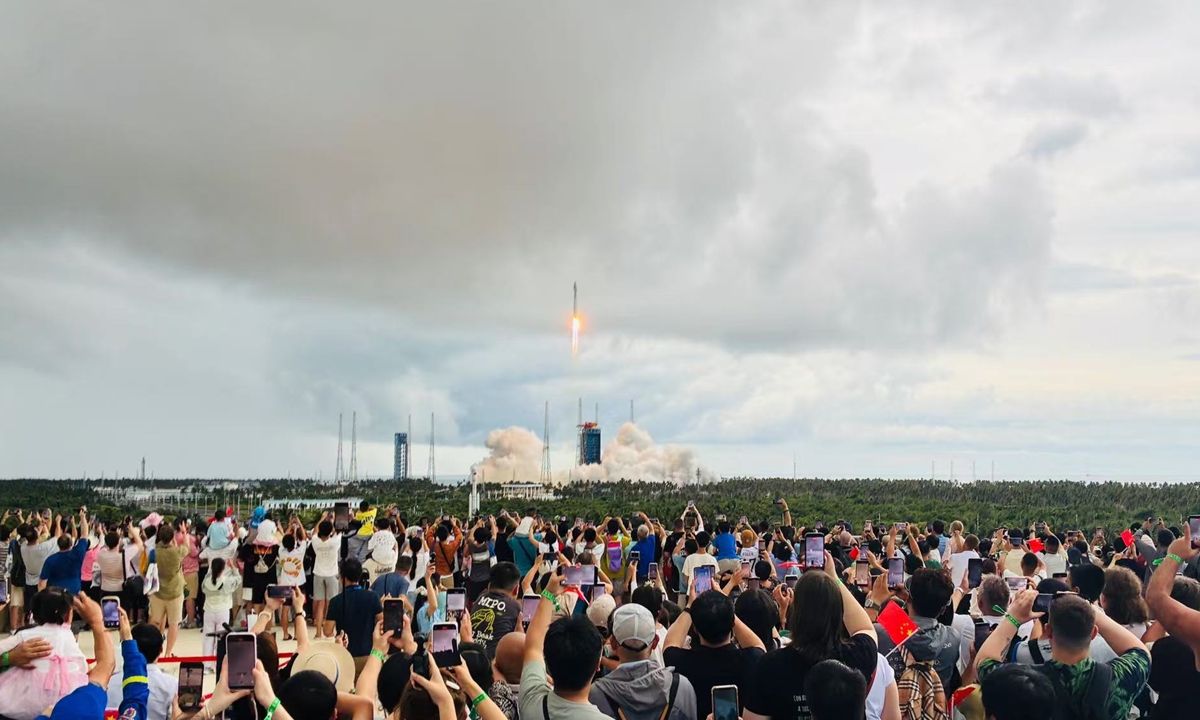
Two successful launches among China's recent frequent moves caught particular attention of space watchers - the 24th group of low-Earth orbit internet (LEO) satellites aboard a Long March-12 rocket was sent from a commercial spacecraft launch site in the southern island province of Hainan on Sunday, 12 days after the 23rd group of LEO satellites aboard a Long March-8A rocket was launched from the same Hainan site on August 4.
Sunday's mission marked the 663rd launch of the Long March series of carrier rockets, which on Monday sent an SEO satellite into preset orbit, per Xinhua.
Experts said the launches of two groups of LEO satellites within 12 days underlined that China is notably accelerating its pace of building its satellite internet constellation.
"The launch of LEO satellites has now entered a regular and cyclical rhythm, with batches of satellites continuously being sent into orbit at relatively stable intervals," Kang Guohua, a senior member of the Chinese Society of Astronautics and a professor of Aerospace Engineering at Nanjing University of Aeronautics and Astronautics, told the Global Times on Monday.
China launched the first group of LEO internet satellites on December 16, 2024, proceeding to the 24th batch in about 20 months. Kang said three major production and launch "assembly lines" are supporting the effort: satellite factories featuring centralized design in Beijing, coordinated supply chains and mass production; rockets with streamlined launch and testing procedures and multiple configurations; and launch sites capable of supporting routine constellation deployment.
The Long March-12, which played a key role in the latest LEO satellite launch, is China's first 4-meter-class single-core-stage carrier rocket and was specifically developed for commercial launch needs. It is about 62.6 meters long, has a liftoff mass of 430 tons and can carry more than 12 tons to low-Earth orbit. Its first stage is equipped with four 1,250-kilonewton pump-fed liquid oxygen-kerosene engines and uses a newly developed coal-based aerospace kerosene, according to Shanghai Academy of Spaceflight Technology.
The rocket adopts a "three-horizontal" launch preparation model: horizontal assembly, horizontal testing and horizontal transportation. Depending on mission requirements, it can use fairings with diameters of 4.2 or 5.2 meters and support both single-satellite and multi-satellite launches into different orbits.
"This flexibility makes the Long March-12 particularly suitable for the 'one rocket, multiple satellites' model required for constellation deployment, making it one of the main launch vehicles currently used for LEO constellation missions," Kang said.
The mission also highlighted the launch site's growing ability to support high-frequency launches. The rocket took only two and a half days from being transported to the launch area to liftoff, setting a record for the shortest time a rocket occupied the launch position at the site, Kang said.
Despite the rapid progress, experts cautioned that the 228 satellites currently in orbit remain some distance from the ultimate goal. China's satellite internet project has a long-term goal of deploying nearly 8,000 satellites and is now in an accelerated "weaving" phase.
China's advantage lies in its ability to control costs and boost production efficiency once satellite manufacturing reaches mass-production scale, another expert surnamed Liu told the Global Times.
"Whether it is the production capacity of AI centers or the factory in Hainan, which has an annual satellite manufacturing capacity of 1,000 units, satellite production itself is not the problem," Liu said. "More bottlenecks lie in the operational efficiency of launch pads and the rocket payload and recovery technology."
The real challenge lies in rocket reusability. Only by lowering launch costs and increasing launch frequency can China sustain a pace of more than one launch per week. This is also the strategic significance of accelerating the development of reusable rocket technology, including the Long March-10B and privately developed rockets, Kang further noted.
Chinese Academy of Engineering academician Deng Zhongliang previously said in an interview that satellite internet will serve as an indispensable space-time infrastructure for 6G, enabling emerging industries worth trillions of yuan, including the low-altitude economy, advanced autonomous driving and the Internet of Things (IoT).
。

B | 悬而未决 87 年的经典数学难题——雅可比猜想(Jacobian Conjecture),可能被一个只有三行公式的反例推翻了。 7 月 20 日,数学家、Anthropic 研究人员 Levent Alpöge 在社交平台 X 公布了一个三元多项式映射。它满足了雅可比猜想要求的前提条件,却违背了猜想的结论,因此构成了一个可能推翻整个猜想的反例。 更引人关注的是,Alpöge 在帖子中将这一反例归功于 Anthropic 最新发布的 AI 模型 Claude Fable 5。他还表示,是朋友 Akhil 首先向模型提出这一问题,而 Fable 5 则在他们观看世界杯决赛期间持续搜索,最终找到了这一反例构造。 (来源:X) 消息发布后,数学界迅速展开核验。斯坦福大学数学系助理教授 Jared Duker Lichtman 转发称这一结果“相当惊人”;MathOverflow 很快收录了相关讨论,不少研究者还利用 Wolfram Alpha、SymPy 等工具进行了独立计算。目前,最关键的两项验证:雅可比行列式是否恒为 −2,以及三个不同点是否确实映射到同一点,均已通过公开计算验证。 如果后续没有发现新的漏洞,这将意味着:1939 年提出的雅可比猜想在三维情形下不成立,并可进一步推出其在所有三维及以上维数下均不成立;而二维情形仍然保持开放。 被称为“民科坟场”的雅可比猜想 雅可比猜想由德国数学家奥特-海因里希·凯勒(Ott-Heinrich Keller)于 1939 年提出,讨论的是一个看似简单、却困扰数学界近九十年的问题:什么时候,一个多项式映射一定能够"倒推"回原来的函数? 图|海因里希·凯勒(左)(来源:Wikipedia) 理解这个猜想,可以先想象一张橡胶膜。如果局部看,每一小块都没有被撕裂或压扁,人们很自然会问:整张膜会不会在别的地方折叠起来,让两个不同的位置重合? 数学里的情况与此类似。对于多变量多项式映射,如果它在每一个局部都满足一种“没有折叠”的条件,也就是雅可比行列式始终等于同一个非零常数。那么它是否一定在整体上也是一一对应的?它的逆映射又是否仍然是一个多项式? 这就是雅可比猜想。它的陈述只有短短几句话,却异常难以证明。不少数学研究者戏称它为“crank graveyard”——“民科坟场”。许多人被它吸引,最终却陷入漫长而徒劳的推导之中。 著名华人数学家张益唐,就曾把整个博士阶段投入到这个问题。

C | 1991 年,他在普渡大学完成博士论文《雅可比猜想与域扩张的次数》,导师莫宗坚是国际上研究雅可比猜想最重要的学者之一。张益唐的工作推进了这一研究方向,却并没有解决猜想本身。后来,他离开代数几何,转向解析数论,并最终因证明有界素数间隔而闻名世界;雅可比猜想,则依然留在开放问题名单中。

D | 1998 年,菲尔兹奖得主 Stephen Smale 将其列入著名的《下一个世纪的数学问题》(Mathematical Problems for the Next Century)第 16 题,认为它的解决将对数学发展产生重要影响。

E | 过去近 90 年里,一维情形早已证明成立,二维至今仍未解决,而三维及更高维也始终没有答案。

F | 由于这一猜想要求所有维数都成立,因此,只要在任意一个维数找到反例,整个猜想就会被推翻。 三个点,击穿一个猜想 而此次,Alpöge 公布的是一个从三维复空间到三维复空间的多项式映射: 直接计算可知,这个映射的雅可比行列式恒等于 −2。

G | 由于 −2 是一个非零常数,因此它完全满足雅可比猜想的前提条件。 然而,当把三个不同的点 分别代入这一映射时,得到的结果却都是同一个点: 这足以构成反例。原因很简单:如果多个不同的输入对应同一个输出,那么映射就不是单射。换句话说,当已知输出时,无法唯一确定原来的输入,因此它不可能拥有逆映射,更不可能拥有由多项式组成的逆映射。这与雅可比猜想的结论正面冲突。 这个反例还具有极强的可核查性。许多重大数学成果往往需要专家花费数月甚至数年时间,逐页检查上百页证明;而这个结果的核心,仅涉及两项有限的代数计算:一是验证雅可比行列式恒等于非零常数,二是验证三个不同的点确实映射到了同一个点。 截至目前,这两项计算均已得到公开复核。研究者 Zihan Zhang 给出了独立的 SymPy 验证脚本,并指出,只需将其中一个输出坐标乘以 −1/2,就可以把雅可比行列式规范化为猜想中更常采用的常数 1,而这不会改变反例的本质。 如果这一反例最终成立,它不仅推翻三维情形,也意味着所有更高维情形都不再成立。因为只需在三维反例后增加若干保持不变的坐标,就可以直接构造出任意更高维的反例。不过,二维雅可比猜想仍然是一个独立的开放问题 值得补充的是,Levent Alpöge 并不是从 AI 领域半路进入数学,而是一位长期从事数论与算术几何研究的职业数学家。近年来,他才加入 Anthropic,从事人工智能研究。 他本科毕业于哈佛大学,主修数学,并获得物理学硕士学位;随后在剑桥大学完成数学高级研究课程。2020 年,他在普林斯顿大学获得数学博士学位,导师是菲尔兹奖得主 Manjul Bhargava。

H | 图|Levent Alpöge(来源:Quanta Magazine) 大型语言模型兴起后,Alpöge 开始转向人工智能。他曾在个人主页写道,GPT-4 让他认为人工智能是“人类创造过的最有意思的东西”,因此重新回到计算机科学领域,希望增加这场变化产生积极结果的可能性。

I | 根据目前公开的信息,这次发现的大致过程是:Akhil 提出问题,Alpöge 将其交给 Claude Fable 5 进行探索,模型最终给出了具体的反例构造;随后,Alpöge 公开了这一构造,数学界再通过人工推导以及 Wolfram Alpha、SymPy 等工具进行了独立验证。 这一过程与 AI 替数学家写出一份传统意义上的数学证明有所不同。

J | 对于否定一个猜想而言,并不需要解释所有可能情况,只需要找到一个满足前提、却违反结论的反例即可。这样的任务天然适合计算探索:模型可以不断尝试构造候选映射、调整参数、检查雅可比条件,再寻找是否会出现不同点映射到同一点的情况。 如果这一反例最终得到确认,它带来的意义将十分重大。因为它展示了一种此前极少出现的研究模式:不是 AI 帮助数学家验证已经存在的思路,而是AI参与寻找一个人类 87 年来始终没有找到的数学对象。 从 AlphaGeometry 解决竞赛题,到 GPT、Gemini 参与证明具体命题,再到这一次可能找到推翻经典猜想的反例,大模型参与数学研究的角色正在发生变化。它开始探索的,不再只是“答案”,而是过去只有数学家才会进入的未知搜索空间。 参考链接: 1.https://x.com/leventalpoge 2.https://mathoverflow.net/questions/513387/galois-structure-of-the-new-counterexample-to-the-jacobian-conjecture-an-explic 3.https://www.leventalpoge.com/ 4.https://dataspace.princeton.edu/ 5.https://www.ams.org/prizes-awards/ams-morgan-prize 运营/排版:何晨龙 注:封面由 AI 辅助生成。
Current article:http://eq9.qiuergejiaolaiaozhuangshi.buzz/ai06/kjxj.html
Published on:13:46:56